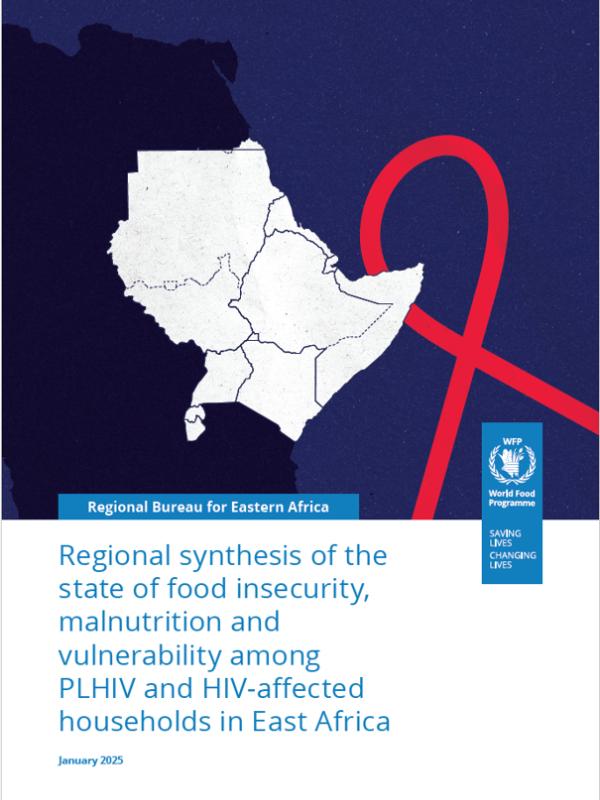
This regional synthesis consolidates over a decade of peer-reviewed evidence and WFP data to illustrate the intertwined challenges of food insecurity, malnutrition, and socio-economic vulnerability among people living with HIV (PLHIV) in East Africa. Aligned with WFP’s 2025–2030 HIV Strategy—Feeding Health, the Last Mile on HIV—this analysis underscores the urgency of tackling overlapping deprivations and structural barriers that heighten HIV risks and hinder treatment success. By examining assessments from Burundi, Djibouti, Kenya, Rwanda, Somalia, and South Sudan, the synthesis fills critical evidence gaps, clarifies how food and nutrition insecurity intersect with broader socio-economic factors, and sets the stage for more targeted, integrated interventions.
Continue reading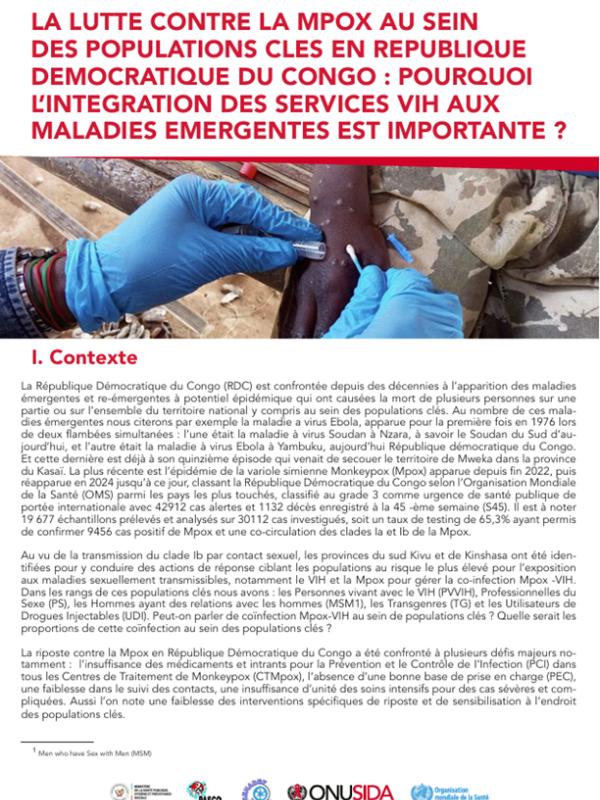
This French-language document presents the Mpox–HIV response among key populations in the Democratic Republic of the Congo, highlighting the importance of integrating HIV services into responses to emerging diseases. It showcases how community-led approaches, including peer outreach and the “stellar approach,” have improved case detection, contact tracing, and access to prevention and care, while reinforcing health system resilience. Ce document présente la riposte Mpox–VIH en République démocratique du Congo auprès des populations clés, en soulignant l’importance de l’intégration des services VIH dans les réponses aux maladies émergentes. Il met en évidence le rôle des approches communautaires, notamment la mobilisation des pairs et l’approche stellaire, pour améliorer la détection des cas, le suivi des contacts et l’accès à la prévention et aux soins, tout en renforçant la résilience du système de santé.
Continue reading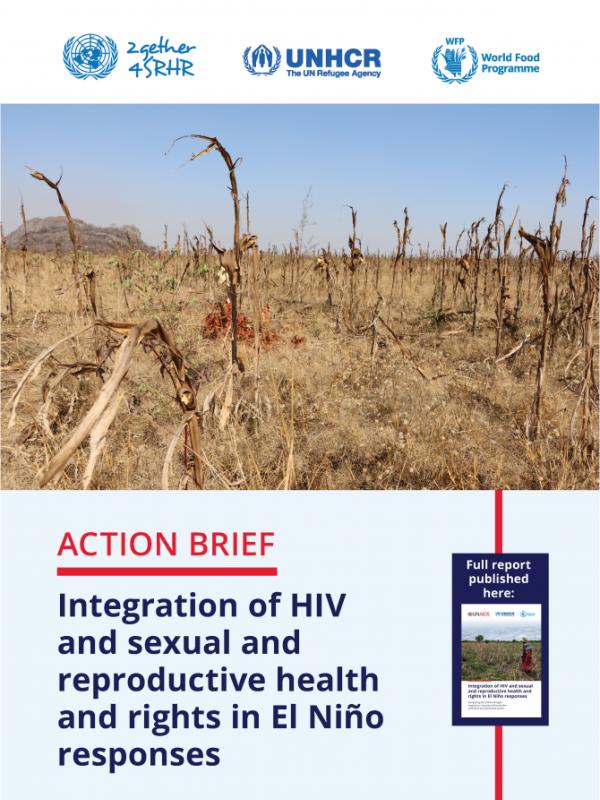
The action brief is summarizing key findings, lessons learnt and recommendations from the The El Niño comparative study, jointly commissioned by UNAIDS, WFP, and UNHCR to examine the impacts of the 2015/2016 and 2023/2024 El Niño events on HIV in Southern Africa within in the context of access to HIV-related services, sexual and reproductive health and rights (SRHR), genderbased violence (GBV), food insecurity, and displacement. The full report can be found in the library.
Continue reading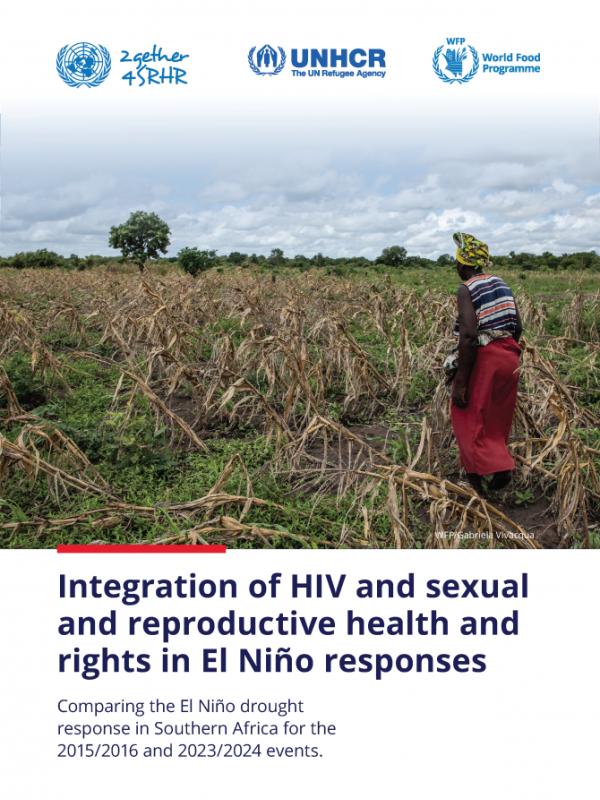
This report compares the impact of El Niño-induced climate events in Southern Africa during the 2015/2016 and 2023/2024 cycles, with a focused lens on HIV, sexual and reproductive health and rights (SRHR) and related vulnerabilities including gender-based violence (GBV), food insecurity and displacement. The analysis highlights how climate shocks intensified existing HIV and SRHR challenges, despite specific improvements and applied learnings between the two time periods.
Continue reading
This study explores whether current policies and services adequately address the SRHR and HIV needs of adolescent girls and young women in emergencies, and identifies missed opportunities to support those living with HIV. A scoping review of literature (2002–2017), desk review of guidance documents, and expert consultations informed the analysis.
Continue reading
The study explores the impact of political instability in Cameroon's North and Southwest Regions on HIV/AIDS response efforts. Through interviews with frontline healthcare providers, six key challenges were identified: access to healthcare services, continuity of treatment, risk of new infections, socioeconomic impacts, effects on healthcare workers' well-being, and coping mechanisms. The findings highlight the need for coordinated efforts to strengthen the health sector, decentralize HIV care, improve supply chains, and protect healthcare workers to mitigate the crisis's impact on HIV/AIDS response and overall health services.
Continue reading
The retention in care of patients undergoing antiretroviral therapy (ART) is a cornerstone for preventing AIDS-associated morbidity and mortality, as well as further transmission of HIV. Adherence to ART poses particular challenges in conflict-affected settings like the Central African Republic (CAR). The study objective was to estimate the rate of lost-to-follow-up (LTFU) and determine factors associated with LTFU among patients living with HIV under ART in CAR.
Continue reading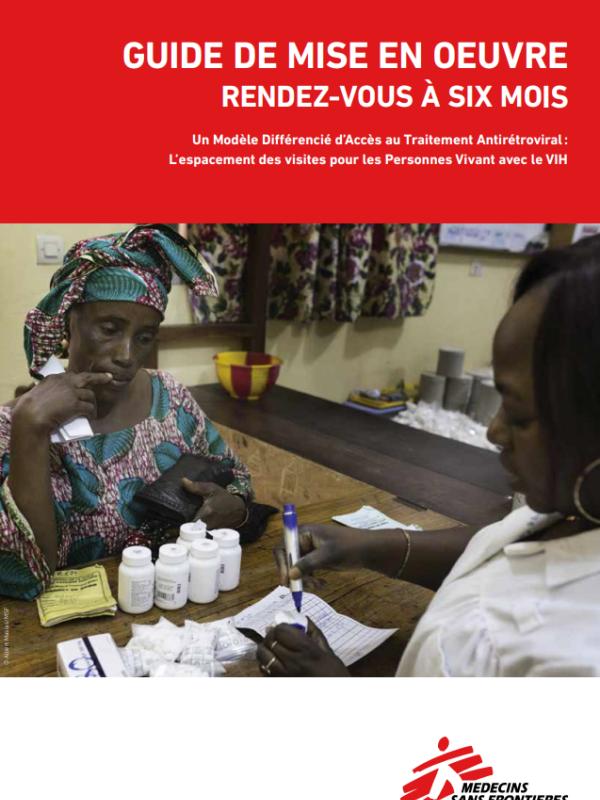
Guide de Mise en oeuvre rendez-vous à six mois - Un Modèle différencié d’Accès au Traitement Antirétroviral avec espacement des visites pour les personnes vivant avec le VIH.
Continue reading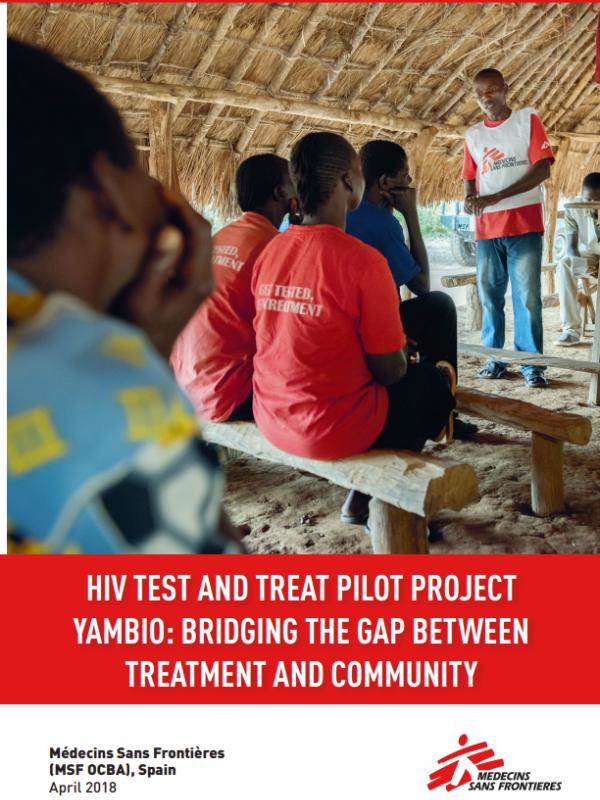
Brochure presenting the Yambio HIV test and treat pilot project implemented by MSF in South Sudanin view of bridging the gap between treatment and community.
Continue reading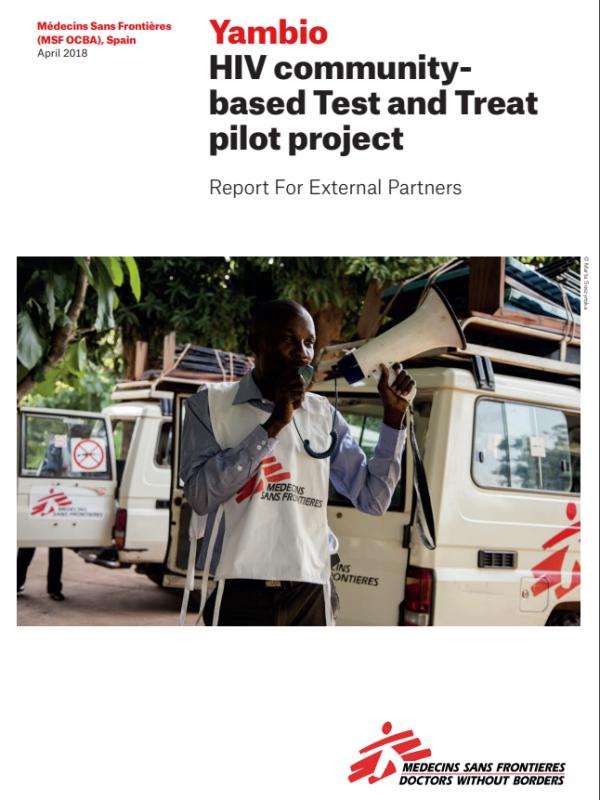
Report to external partners describing the Yambio HIV community-based Test and Treat (T&T) pilot project meant to assess T&T feasibility and acceptability (‘Treat All’ as set out in WHO guidelines) through a community-based mobile HTC programme including same day antiretroviral (ARV) treatment initiation and the delegation of tasks to less specialised health staff. MSF wanted to document whether bringing HIV testing and treatment closer to patients’ homes, with simplified protocols and tools (‘Treat All’), would result in treatment outcomes similar to those of facility-based care.
Continue reading