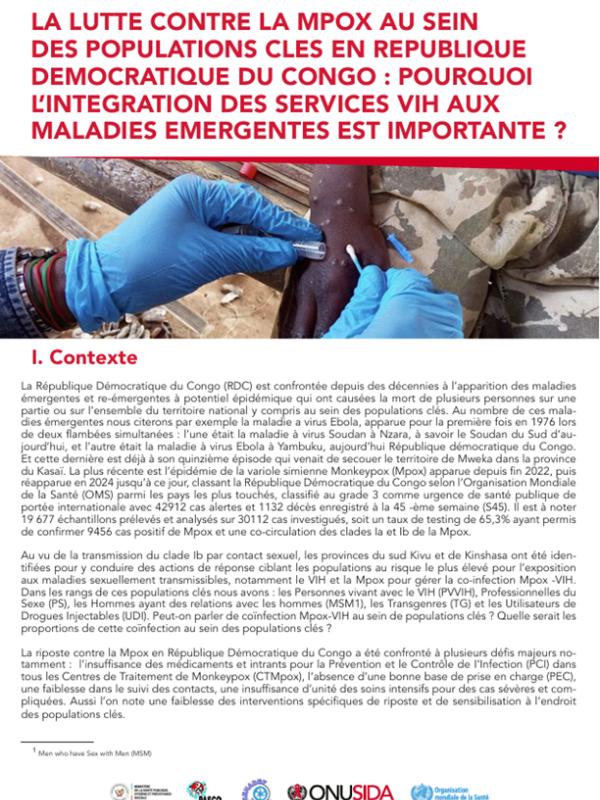
This French-language document presents the Mpox–HIV response among key populations in the Democratic Republic of the Congo, highlighting the importance of integrating HIV services into responses to emerging diseases. It showcases how community-led approaches, including peer outreach and the “stellar approach,” have improved case detection, contact tracing, and access to prevention and care, while reinforcing health system resilience. Ce document présente la riposte Mpox–VIH en République démocratique du Congo auprès des populations clés, en soulignant l’importance de l’intégration des services VIH dans les réponses aux maladies émergentes. Il met en évidence le rôle des approches communautaires, notamment la mobilisation des pairs et l’approche stellaire, pour améliorer la détection des cas, le suivi des contacts et l’accès à la prévention et aux soins, tout en renforçant la résilience du système de santé.
Continue reading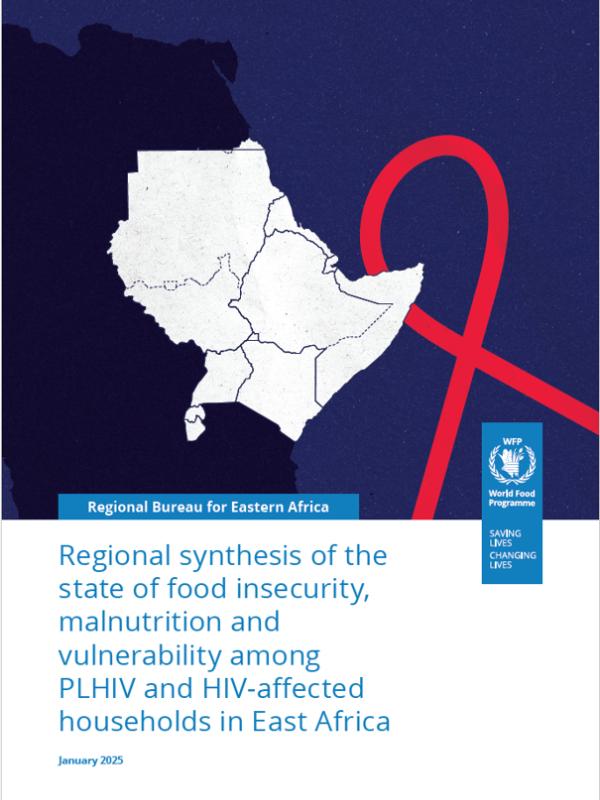
This regional synthesis consolidates over a decade of peer-reviewed evidence and WFP data to illustrate the intertwined challenges of food insecurity, malnutrition, and socio-economic vulnerability among people living with HIV (PLHIV) in East Africa. Aligned with WFP’s 2025–2030 HIV Strategy—Feeding Health, the Last Mile on HIV—this analysis underscores the urgency of tackling overlapping deprivations and structural barriers that heighten HIV risks and hinder treatment success. By examining assessments from Burundi, Djibouti, Kenya, Rwanda, Somalia, and South Sudan, the synthesis fills critical evidence gaps, clarifies how food and nutrition insecurity intersect with broader socio-economic factors, and sets the stage for more targeted, integrated interventions.
Continue reading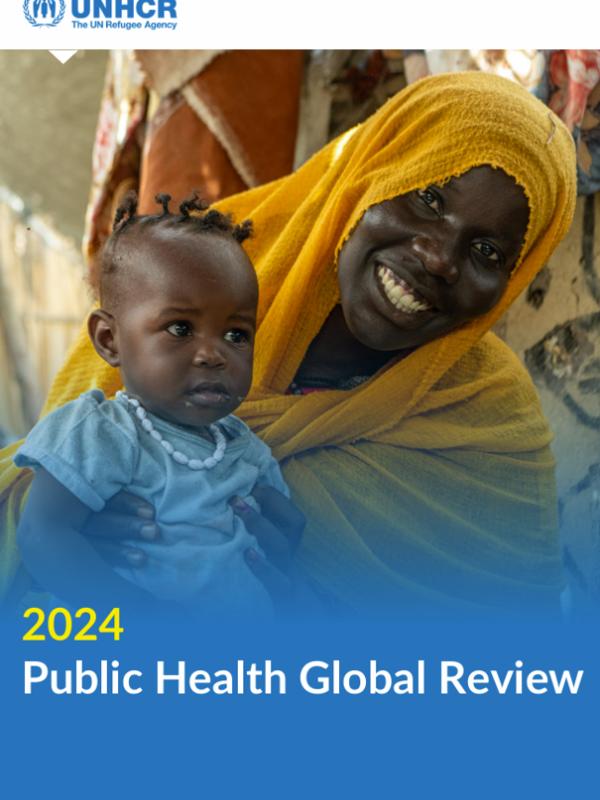
UNHCR’s annual review presents key public-health results from refugee settings in 2024, including access to antiretroviral therapy, community-health systems, referrals, nutrition, mental health and the inclusion of forcibly displaced populations in national health services.
Continue reading
This report summarizes the UNAIDS Joint Programme’s 2024 results in humanitarian settings and pandemic preparedness, including country-level HIV interventions, integration of priority HIV services into preparedness frameworks, capacity development and progress on inter-agency coordination and guidance.
Continue reading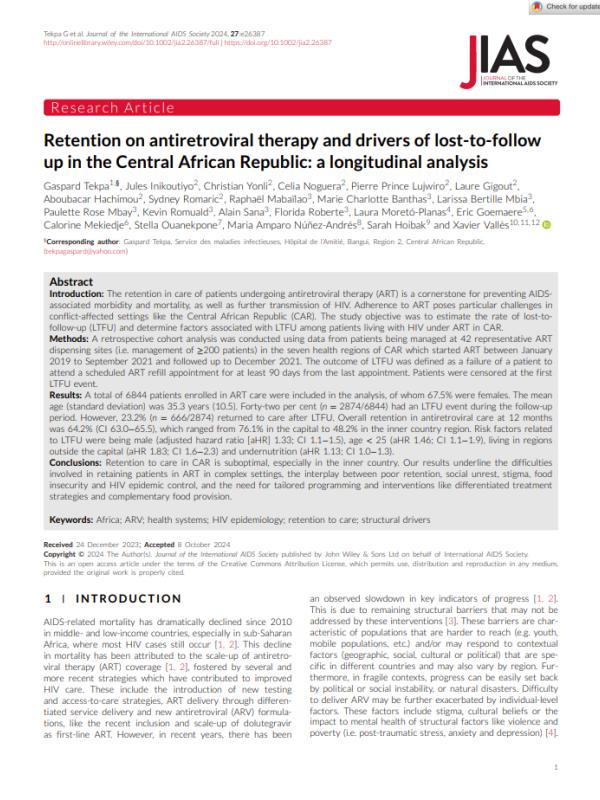
The retention in care of patients undergoing antiretroviral therapy (ART) is a cornerstone for preventing AIDS-associated morbidity and mortality, as well as further transmission of HIV. Adherence to ART poses particular challenges in conflict-affected settings like the Central African Republic (CAR). The study objective was to estimate the rate of lost-to-follow-up (LTFU) and determine factors associated with LTFU among patients living with HIV under ART in CAR.
Continue reading