This handbook is a quick-reference tool that provides practical, field-level guidance to establish and maintain a gender-based violence (GBV) sub-cluster in a humanitarian emergency. It aims to assist humanitarian actors and communities affected by armed conflict, natural disasters and other humanitarian emergencies to coordinate, implement, monitor and evaluate essential action for the prevention and mitigation of GBV) across all sectors of humanitarian action. It considers HIV as a cross-cutting issue.
Continue reading
Global health sector strategies on, respectively, HIV, viral hepatitis, and sexually transmitted infections for the period 2022-2030 guide the health sector in implementing strategically focused responses to achieve the goals of ending AIDS, viral hepatitis B and C and sexually transmitted infections by 2030.
Continue reading
Set of guidelines and standards for humanitarian response in disaster and conflict situations. It includes general guidelines that mainstream considerations related to HIV and specific vulnerable populations, ensuring that all affected individuals receive equitable and appropriate assistance. SPHERE provides minimum standards for health, nutrition, food security, WASH and shelter. HIV is addressed as a vulnerability.
Continue reading
This toolkit aims to assist humanitarian health field staff in measuring quality of care in humanitarian health programs to inform quality improvement activities and includes operational guidance for each tool. In line with the GHC Position Paper on Quality of Care in Humanitarian settings, it can be used in all areas of essential health care as defined by the SPHERE guidelines, including communicable diseases, child health, sexual and reproductive health, injury and trauma care, mental health, non- communicable diseases, and palliative care.
Continue reading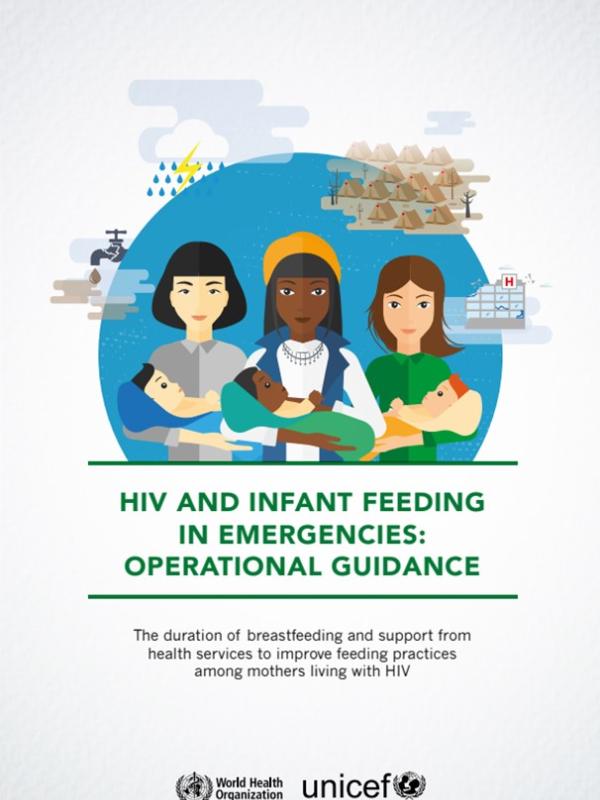
This operational guidance, developed by WHO, UNICEF and ENN, outlines the duration of breastfeeding and support from health services to improve infant feeding practices among mothers living with HIV. It is intended to be used to complement emergency and sectoral guidelines on health, nutrition and HIV, including specifically infant feeding, prevention of mother-to-child transmission of HIV and paediatric antiretroviral treatment.
Continue reading
People who sell or exchange sex in humanitarian situations have particular health and protection needs that are often not well addressed. This document provides operational guidance on how best to meet these needs, and ensure that people who sell/exchange sex have support, and access to quality, non-discriminatory health and protection services. The guidance provides practical advice for reducing risks and ensuring safety for people engaging in sale and exchange of sex in this context.
Continue reading
This practical guide is meant to help develop programs that uphold adolescents' rights to access sexual and reproductive health (SRH) information and services. It presents a toolkit comprising 10 Steps, offering guidance on how to effectively initiate adolescent sexual and reproductive health (ASRH) interventions in refugee settings. And it includes guidance to launch, monitor and evaluate programming to address their specific needs.
Continue reading
The Inter-Agency Task Team (IATT) on HIV in Emergencies developed a series of guidance notes to provide HIV related programmatic advice to several of the clusters as they implement their critical coordination and support role in countries. The notes provide key HIV-related actions to be undertaken during various phases of an emergency with particular emphasis in the immediate aftermath. The Guidance further clarifies the needs of the most vulnerable groups and the importance of ensuring their safety and protection in emergency settings.
Continue reading
Guidance and principles regarding the prevention, treatment, care, and support of HIV/AIDS-affected populations within emergencies and crises. Includes three main components: ▪ Preparedness ▪ Minimum initial response: Basic HIV interventions applicable during the early stages of any emergency. ▪ Expanded response: Additional core HIV interventions tailored to local contexts during later stages of the crisis
Continue reading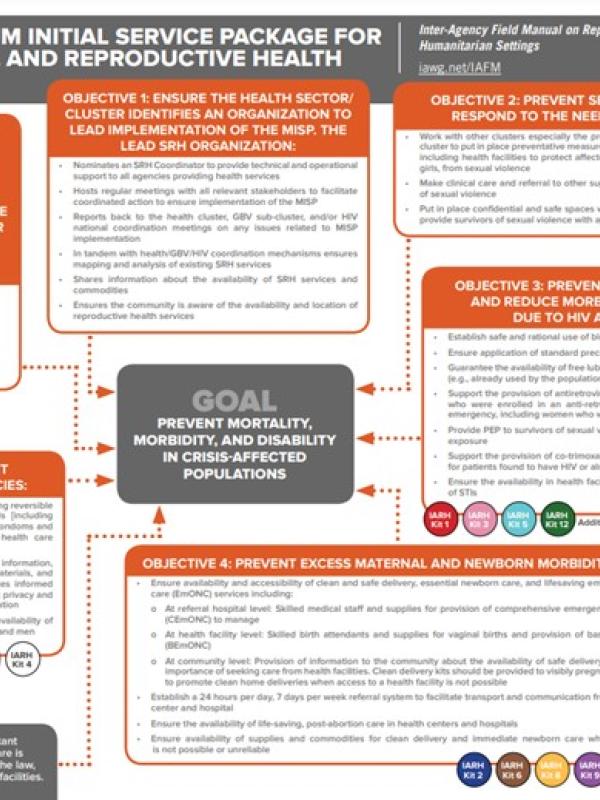
This document is a summary 2-pager describing the Minimum Initial Service Package (MISP) for Sexual and Reproductive Health (SRH) in crisis situations = crucial, lifesaving activities required to respond to the SRH needs of affected populations at the onset of a humanitarian crisis. It is available in English, French, Spanish and Portuguese.
Continue reading